This is a read-only archive of the old Madabout Kitcars forum. New posts and replies are no longer possible, but every thread is still here to browse and read.
I've spoken on the phone to Micky1mo and he doesn't have any plans for the frame, but I'm sure I'll find one somewhere!
As for the colour, looks great, think that's pretty much the colour I would want to go for! At least I know what it's called now!
If the bodies need so much to correct them, they wouldn't fit that frame after all, would they? So I guess a frame in the style of, but made to fit a corrected body s the answer, IF you have welding gear and some experience of making decent penetrative welds.
Herald , Sammio body , really good pics from Towed and a parent in the trade .
You won't have any trouble creating a frame , I am sure. The frames didn't touch in many places , more a bracing exercise when combined with original chassis , wooden floors , side panels etc , body and , fibreglass matt , resin and bonding paste ( The Sammio builders favourite glue ! ) , so as long as it resembles those pics and kind of does the same thing , it will do the job.
''Simple'' was always a key word in the creation of these cars.
You can build a Sammio Spyder with out the top frame, simply by using the original body and floor pans.
I'll get some photos over the weekend and show you how.
You can build a Sammio Spyder with out the top frame, simply by using the original body and floor pans.
I'll get some photos over the weekend and show you how.
Can you really? How safe is it doing that though?
Look forward to seeing the photos! Thanks.
Mike, you also spoke to my dad last night on the phone I believe, also called Mike.
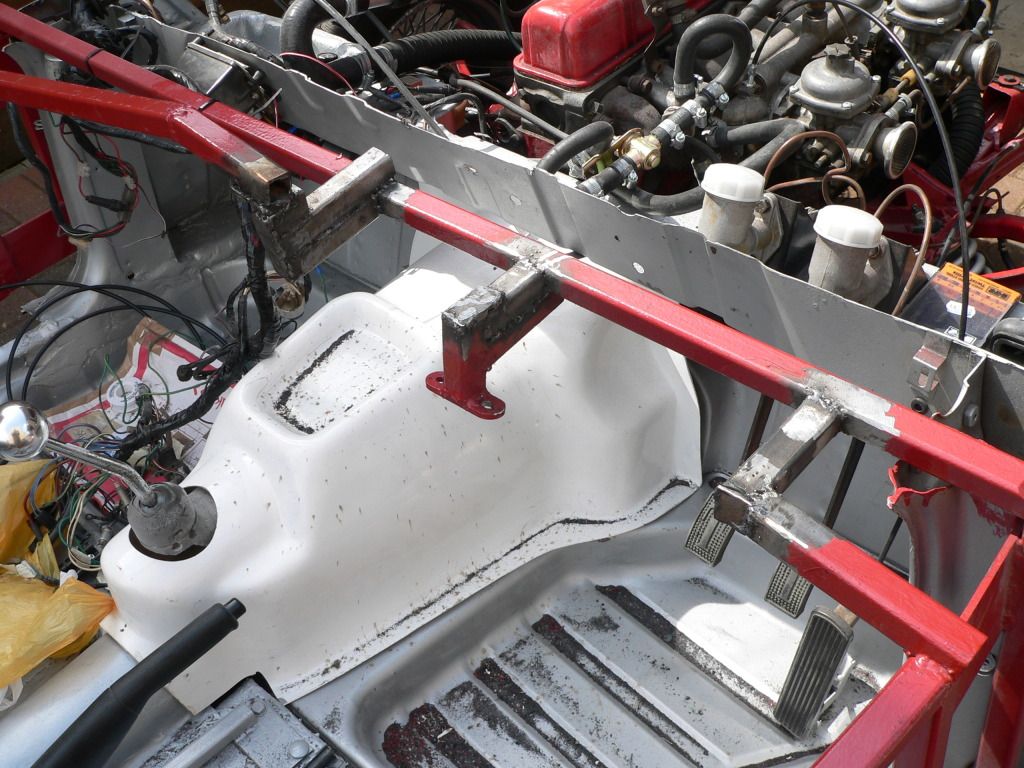
Harvey When i bought my body it came with no frame so after restoring the chassis i simply lifted the body onto the chassis supporting with bits of wood and made some rough measurements then tacked a frame together making adjustments to suit the body as you go along.
From what i am hearing the new owner of the spyder is possibly going to remake the molds and hopefully get rid of all the issues from the past cars so making a sub frame should be doddle.
If you want to see how much work was involved cutting and shutting with the original Navigator body then check out my thread and you will see it's not an exact science which is the same for the sub frame. Order some mild steel box section in either 20x20 or 25x25 and have ago it really is easy and the beauty with this car is you can make adjustment as you go along without having any thoughts that you may ruin a good body as its cheap.
Harvey When i bought my body it came with no frame so after restoring the chassis i simply lifted the body onto the chassis supporting with bits of wood and made some rough measurements then tacked a frame together making adjustments to suit the body as you go along.
From what i am hearing the new owner of the spyder is possibly going to remake the molds and hopefully get rid of all the issues from the past cars so making a sub frame should be doddle.
If you want to see how much work was involved cutting and shutting with the original Navigator body then check out my thread and you will see it's not an exact science which is the same for the sub frame. Order some mild steel box section in either 20x20 or 25x25 and have ago it really is easy and the beauty with this car is you can make adjustment as you go along without having any thoughts that you may ruin a good body as its cheap.
I'll take a look at your thread, thanks for your help!
You can build a Sammio Spyder with out the top frame, simply by using the original body and floor pans.
I'll get some photos over the weekend and show you how.
As Promised
A Sammio Spyder.
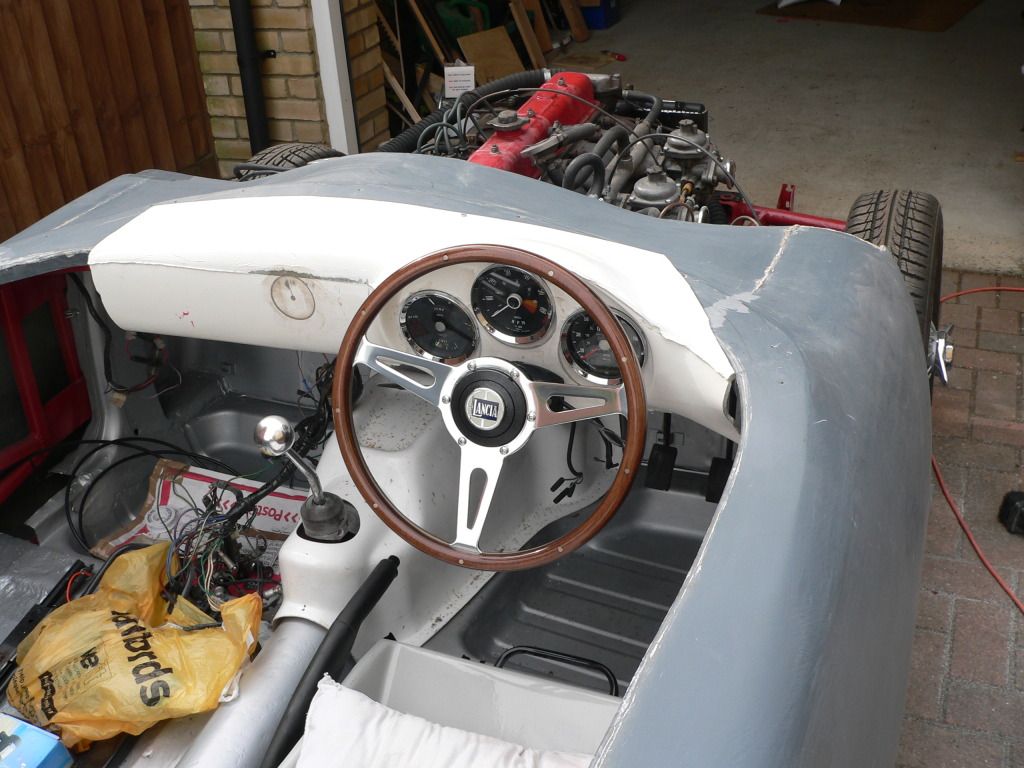
This looks like a pretty standard part built Sammio Spyder, but if you look closer
The body is supported with no top frame!!
This is how
By using both the "A" and "B" post the body is supported more-or-less where the old style top frame would work.
Using as much of the original body as possible will only speed up the build. I would have used the boot floor and rear wheel arches but they where past it.
The best way of doing this is, cut a little and try it, cut a little and try it, cut a little and try it. and so on.
Eventually it will fit nicely over the cut down original body work.
The new body contacts the original bodywork at the top of the "A" post, "B" post, along the front bulkhead and the full length of each lower sill. Much like the old top frame did.
Another advantage is the hand brake, gearbox shelve, prop shaft tunnel and floor pans are already fitted and as a bonus the floor pans are already lowered.
A top frame will need to be added for impact strength preferably welded but if you can't weld then drill and bolt it on. The difference in strength will be minimal as you can add as much steelwork as you want, and as the top frame is fitted where and how the builder thinks best or would like it no plans are needed
There, more than one way to skin-a-cat or should I say build-aSammio
PS, this will probably be the way I recommend all the new Sammio's to be built, body work allowing of course eace:
Mick, that's all well and good where a saloon body exists as the donor, but we have an immaculate GT6 Mk 1 frame. No body work apart from a very ratty bulkhead.
So we're back to no frame. I can make the components of a frame, no sweat, but I can't weld the bits. I suppose a mobile welder would be OK. I do know one. But he'll cost!
But thanks for the pics. I'm sure they help saloon donor folks.
That appears to work ok . like you say a bit of top framing and some little braces combined with all the other materials that creat the tub area etc. and jobs a good'un !
The simplicity of the original wins the day again !
That appears to work ok . like you say a bit of top framing and some little braces combined with all the other materials that creat the tub area etc. and jobs a good'un !
The simplicity of the original wins the day again !
Spot on advice EP.
Just remember that you need to brace the sides and back of the cockpit edges so you can put your weight on them when you climb out (click on the picture for video) -
It's actually much easier than my wife makes it look, ideally you just hoist yourself up and stand on the seat squab (still facing forwards), then step over the side.
The car is so low btw that doors wouldn't help with ingress/egress. They might even make it harder as you couldn't put your weight on them once they were open without straining the hinges.
The assistant builder fully agrees, we'll definitely build it this way, with the addition of some side-impact protection and bracing here and there.
We'll be coming down with the camera in a few weeks Mike, I'll call beforehand so you can warm up the kettle!
Cheers
Mike
What do you do for the top seat belt anchor, to get it a suitable height relating to your shoulder and strong enough?
This was my problem with the Berlinetta I am currently restoring, it was way too low, irrespective of regulations, I would prefer not to be crippled by a seatbelt which is meant to minimise injuries in a collision. I raised it almost 200mm, it's now just about right, could be higher but no lower.
Stupid question from a bloody foreigner: Are seatbelts required by law in every kitcar no matter what the production year?
All of my cars are before 1972 and don't have seatbelts and i really don't want them too as i hate seatbelts.
Call me stupid but especially in a open top car made of a plastic tub braced with some flimsy metal tubing i want rather to bounce out in case of accident than strapped tight to it when it crumbles as a milk carton.
Stupid question from a bloody foreigner: Are seatbelts required by law in every kitcar no matter what the production year?
All of my cars are before 1972 and don't have seatbelts and i really don't want them too as i hate seatbelts.
Call me stupid but especially in a open top car made of a plastic tub braced with some flimsy metal tubing i want rather to bounce out in case of accident than strapped tight to it when it crumbles as a milk carton.
From memory seatbelts were compulsory for the outer front seats from 1966, the relevant British Standard was BS-AU43a 1965, again from memory... Many cars were fitted with seat belt anchors before that date. For example our 1952 Alvis TA21 with an aluminium drop-head Tickford body had seatbelt anchors screwed to the Ash framework.
One of the key requirement for BS-AU43a was that the belt and anchors withstand a sudden load of six tons, without tearing or breaking out of the bodyshell, bending and de-formation is permitted.
I think statically you are safer trapped into your crumpled milk carton than sliding on your bum under a large goods vehicle. This is bourn out by the number of fatalities of motorcycle pillion passengers, who are usually dumped in the road and either collide with the scenery or run over by passing vehicles... Heaven forbid. Perhaps a roll bar?



 !
! 


 eace:
eace: 