This is a read-only archive of the old Madabout Kitcars forum. New posts and replies are no longer possible, but every thread is still here to browse and read.
Deni - Sorry, I can't offer much in the way of technical advice about the steering or brakes.
But I hope I can offer some general encouragement in that you are making good progress.
Like yourself, I often wonder what happened to other Miglia/Sammio builds.
Unfortunately, I think many builders get overwhelmed by the sheer scale of the task.
It took a lot to keep convincing myself that every job I did, no matter how small, was a step closer to the finish line.
(Which is why I found keeping a build thread such a big help for motivation.)
I think all of us have found this takes longer than we thought/planned/hoped.
(Especially when 'life' gets in the way.)
However, I stick by my theory that as long as you finish, it doesn't matter how long it took.
Thank you for your comments Paul.
Yes, life gets in the way very often, and my build is very slow for various reasons, but I have decided not to worry about it too much anymore - I'm doing as much as I can and when I can.
I do not have any previous experience either. Some jobs that are easy for others are a challenge for me, so I need to do a lot of research, but I'm getting there slowly and I enjoy learning how to do them.
This forum is great and the members are very helpful, friendly and understanding (even if I ask a silly question possibly), so thanks everyone for your help and advice so far - if it wasn't for this forum I would probably not dare to start this build.
Also, my garage is an hour drive from my home, so I can't just pop in and do a couple of hours to keep things moving. I couldn't go there during the lockdown either, which was very frustrating.
Nevertheless, I am grateful that I have a garage at all and I am determined to finish the car one day.
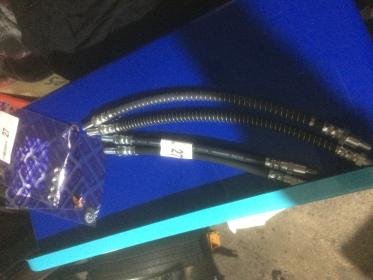
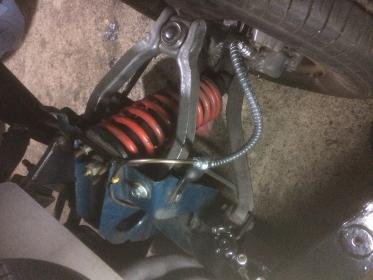
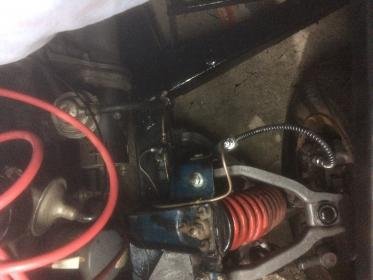
Just a quick update. I was waiting for nearly 4 weeks to receive the flexi brake hoses which were on back order at Rimmers. They have now arrived and I have installed them together with new cupronickel brake pipes.
In the meantime I have done a few jobs. The chassis paint I used previously was not the best one in my opinion, so I have repainted the chassis and the frame with Hammerite.
I know that I won't drive this car much in the rain, but now I have good access, I have wax-oiled the cavities and exposed bits of the chassis before the floor panels are glued and fixed to the chassis.
I have also bought a new 1/4" cupronickel petrol pipe to replace the old one, which is the next job.
Also, I need a bit of advice from you guys please.
I am toying with the idea to install the petrol tank behind the seats, instead of behind the rear axle where it is meant to go now.
The reasons for it are:
1 - I assume that placing the tank in front of the rear axle (between the axles) the weight distribution would be better?
2 - I'm not sure if this is very important - as the petrol tank does not have any baffles inside, the petrol movement inside tank while driving would be less drastic at this position?
3 - Access and maintenance in the future would be better.
4 - I do not have enough space to put the spare wheel in the compartment behind the seats. In that case, I could maybe make a little boot and a compartment in there for the spare wheel.
I wouldn't worry too much about the weight distribution, it's going to be pretty front heavy no matter where you put your tank!
From a safety perspective, behind the seats would put the tank closer to the occupants, which is a bit disconcerting, but it would then be further away from the risk of intrusion damage in a rear-end shunt which is a good thing.
I wouldn't worry too much about the weight distribution, it's going to be pretty front heavy no matter where you put your tank!
From a safety perspective, behind the seats would put the tank closer to the occupants, which is a bit disconcerting, but it would then be further away from the risk of intrusion damage in a rear-end shunt which is a good thing.
Your choice, really
I believe avoiding locating the fuel tank near to the rear is standard in modern cars for the very reason of rear damage. When I had a GTM (fuel tank in front between front 'axle' and bulkhead), a friend said they'd not like a tank in that position..... I responded "at least with it in front I may have some control in whether it collides with anything". They agreed that was a valid point
When I joined up we had (Military spec.) Series 2 Land Rovers, which had the fuel tank and filler cap under the passenger seat. We used to joke that Land Rover put it there to make sure they never had to pay any personal injury claims, just funerals which would work out cheaper in the long run.
You had to lift the seat base up to fill the tank and they always stunk of fuel inside due to the inevitable spillages.
The diesel ones were the worst as the smell never dissipated and the front footwells were like an ice-rink due to a generous coating of fuel-oil, which would instantly transfer itself onto the soles of your boots when you climbed aboard.
That meant that the passenger couldn't brace their feet against the bulkhead in corners (see below) while the driver's feet would regularly slip off the highly polished bare metal clutch and brake pedals.
This would leave you kangarooing away from a standstill and then failing to stop at busy junctions because the driver's right leg was wedged between the clutch and brake pedals with their foot on the bulkhead. I'm fairly sure that Land Rover polished the pedals so they could blame the squaddie behind the wheel rather than their feeble brakes when one of their flagship models crashed, which they often did.
The petrol ones weren't quite as bad - your feet only slipped off the pedals when it rained, which was all the time, but at least the spilled fuel evaporated fairly quickly. This would have left the occupants as high as a kite if Land Rover had not thoughtfully provided plenty of ventilation in the cabin.
Unfortunately, they achieved that by ensuring that none of the panels fitted properly so there were huge gaps around the doors and where the canvas roof 'fitted' (I use the term loosely, which is appropriate given how slack they got after an initial nail-breaking period of too-tightness).
This clever design feature allowed plenty of fresh air to circulate in the cabin, along with rain, sleet, snow and midges, which are wee bitey things if you're nae Scottish.
It also meant things could easily get out, like important documents, dropped magazines (both ammunition and porn), vomit and the occasional passenger as the doors would hilariously pop open when cornering hard and nobody bothered to wear the static seatbelts, which were always a tangled mess hanging out of the door bottoms anyway. In fact I do have an ex-forces acqaintance who gets a war pension because of injuries sutained when he fell out of a Land Rover and went under the back wheels.
Anyway, I hope I haven't diverged too far off topic, and good luck finding a place for your fuel tank. I'd just recommend that you don't put it under the passenger seat...
Reading your story, I can only conclude that if the iconic Land Rover could get away with it, so can I, whatever I decide to do.... but I will definitely cross off the "under the passenger seat" option from my list of possible locations
Originally Posted by davecymru:
....Additionally to that and with the help of the nice chaps at Merlin Motorsport and the Triumph Owners Club forum, I've been doing a bit of research into the Vitesse Suspension as I'm not happy with how mine is sitting at the front and my local MOT men don't like chopped springs!
Here's an interesting read (with embedded charts) for anyone looking at altering their front suspension that shows you what std springs were fitted and advise for after-market spring rates:
That shows us is the front spring rates and that the OEM ones are 2 3/4" internal diameter.
Now interestingly.... if you buy the height adjustable GAZ shocks from mssr's Rimmer, those were custom made for Rimmers with a 2 3/4" spring seat so you could fit the std springs!
I know this as the nice man at Merlin Motorsports rang them and asked for me
But... most after-market lowering springs, including the ones i'd bought previously specifically for the Vitesse (although i can't remember where from) are 2 1/2" Internal Diameter!
So, If you alter the spring seats down to 2 1/2" (not too hard i've found!), or buy some 2 1/2" spring seats for your shocks then suddenly the world is your lobster!!
And if you talk to the nice man at Merlin, you can opt for just about any length and rate of 2 1/2" spring that you'd ever want and for not a lot of money at all!!
After my reading and measuring i have now ordered some 2 1/2" x 8" x 325lbs springs and we shall see what we shall see....
Hi,
I need to ask a question please? This is a quote from Dave Cymry's Miglia blog (I hope Dave that you still look at this forum now and then).
I will buy/part exchange the bottom spring seats, but I'm not sure what is the solution for the top plates that are on the original shocks, as they are used with the GAZ absorbers to fix them to the chassis.
Did you modify the original top spring plates in any way to fit the smaller diameter spring?
I know that I could buy springs from Rimmers, but they are longer and stiffer than the ones I would like to buy, and I would prefer not to cut the springs down.
Hi Deni, I just checked back a few pages and I can't see the photos either. Perhaps send John/"JG" a PM as he is the forum 'master'. There have been a number of technical problems with posting stuff on here lately, so the photo issue might be linked to that. Good luck, Paul.
Thanks for your advice, I'll contact Faulkner springs and check out what they charge.
Btw, do you know by any chance if there will be any fitting issues with the original Triumph top spring seats now I intend to use a smaller ID springs?
It's been a while....just a quick update of the recent work I done on the car.
However, it's been long time since I could view the photos on my thread. I have sent multiple emails to the admin, but it seems that nothing changed. This is very frustrating, but I will upload the photos anyway, maybe some of you can see them...
I started to fabricate the handbrake brackets for the spitfire handbrake. As the seating position is further back in Miglia, I have adapted a short cable (from Vauxhall Corsa I believe) to be able to fix the handbrake further back.
I have also braced the front sides of the frame, to make it a bit stronger in that area.
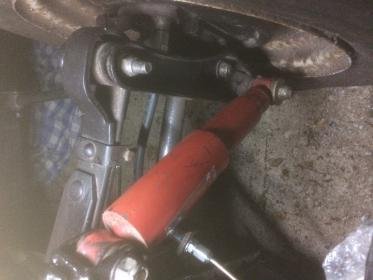
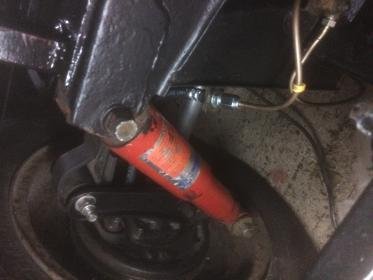
I have also replaced the springs and the shock absorbers. I swapped my 2.3/4" spring seats for 2.5" ones to be able to use the springs with 2.5" ID-there is much more choice of springs with this ID.
I opted for 9" long/170lb springs. The car sits much lower now and I can adjust the height further. I will make a final adjustments when I put the wheels I will be using and when the body is back on the frame.
Finally I have tackled the bulkhead. I have used my fibreglass copy of the original bulkhead that I made some time ago. I was determined not to drill the holes in the frame and use bolts. I decided to bond the fibreglass to the frame with the Tigerseal and I have added some additional brackets that fasten the bulkhead to the frame on the sides and the back side of it. I'm pleased how it turned out.
After this I used aluminium sheet to clad the bulkhead. It was a challenge for me to do this, but I'm happy with the result. I still need to insert and glue/rivet the battery box and finish fettling with the master cylinder plate.